5 steps.
1 topic.
Every step has a purpose. Oyster’s short lessons take learners from curiosity to understanding, with a design informed by learning research.
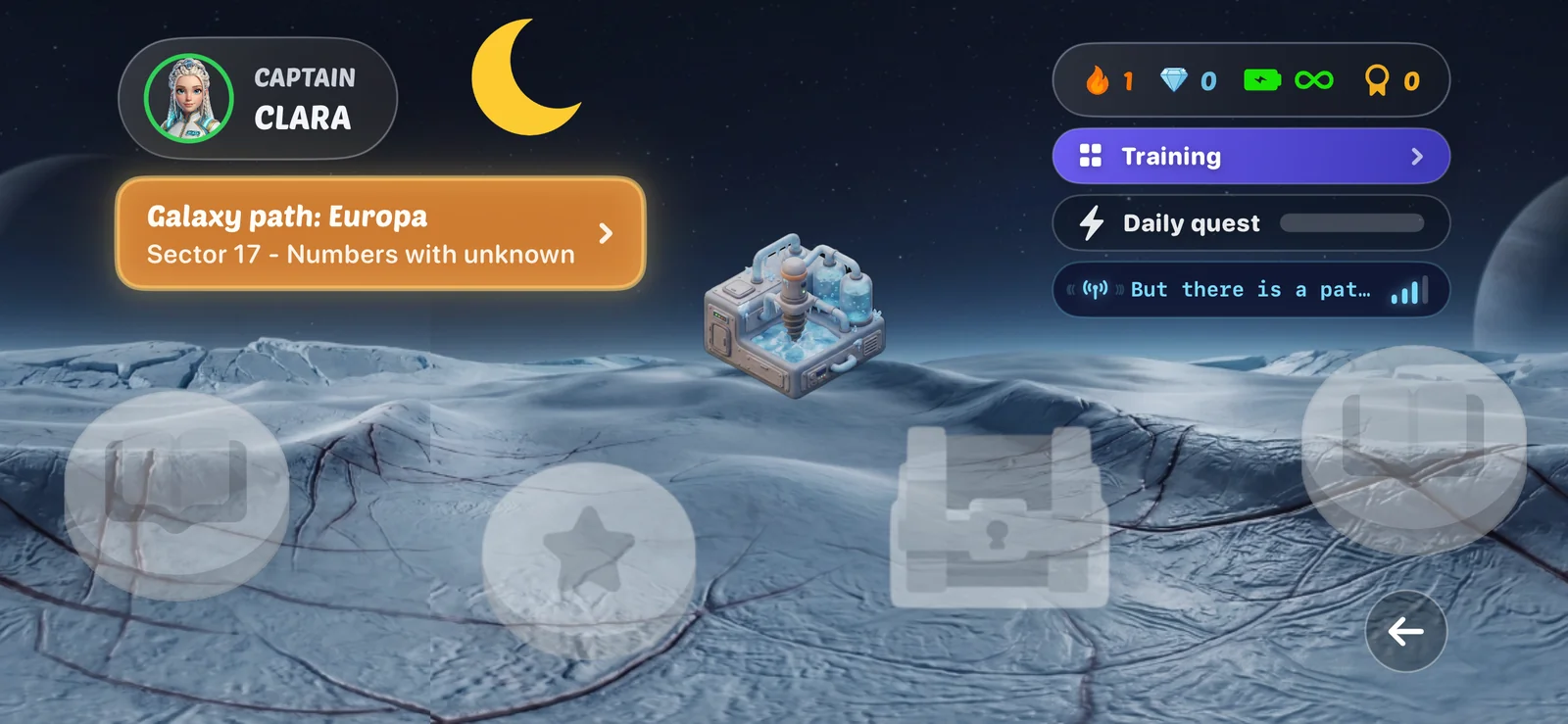
- 1Hook
- 2Discovery
- 3Naming
- 4Contrast
- 5Seal
Explore one topic from five angles.
Follow a geometry lesson through points, line segments, rays and lines. Experience comes first, followed by naming and practice.
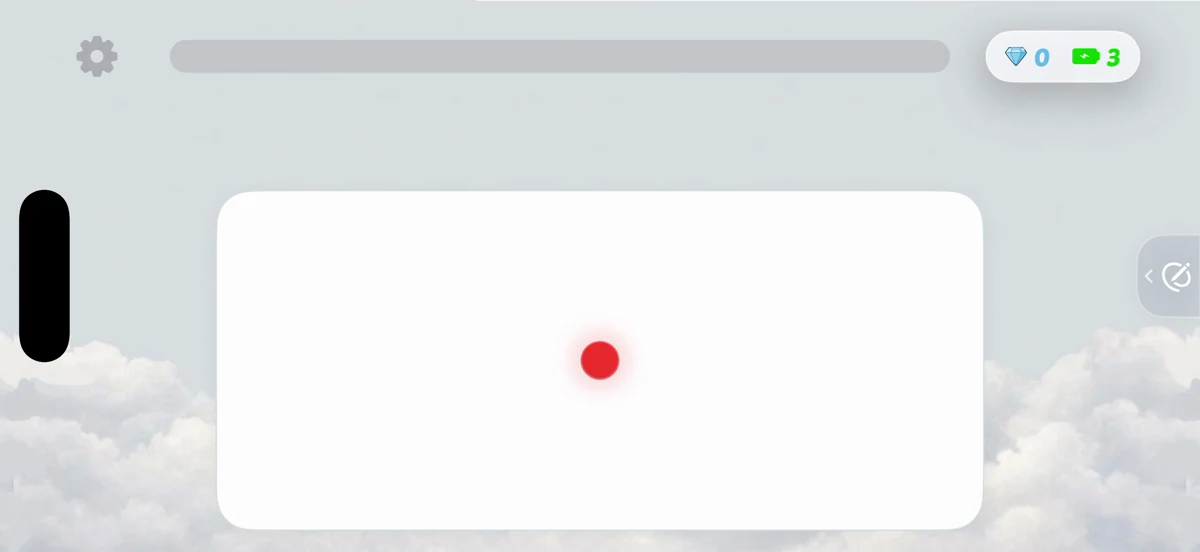
Learning starts with curiosity.
A single point appears. When the learner taps it, another point forms and a line emerges between them. Before introducing a definition, the opening aims to draw attention to the relationship at the heart of the topic.
Curiosity and attention
Instead of starting by memorising the word “point”, the learner watches how points contribute to a line drawing.
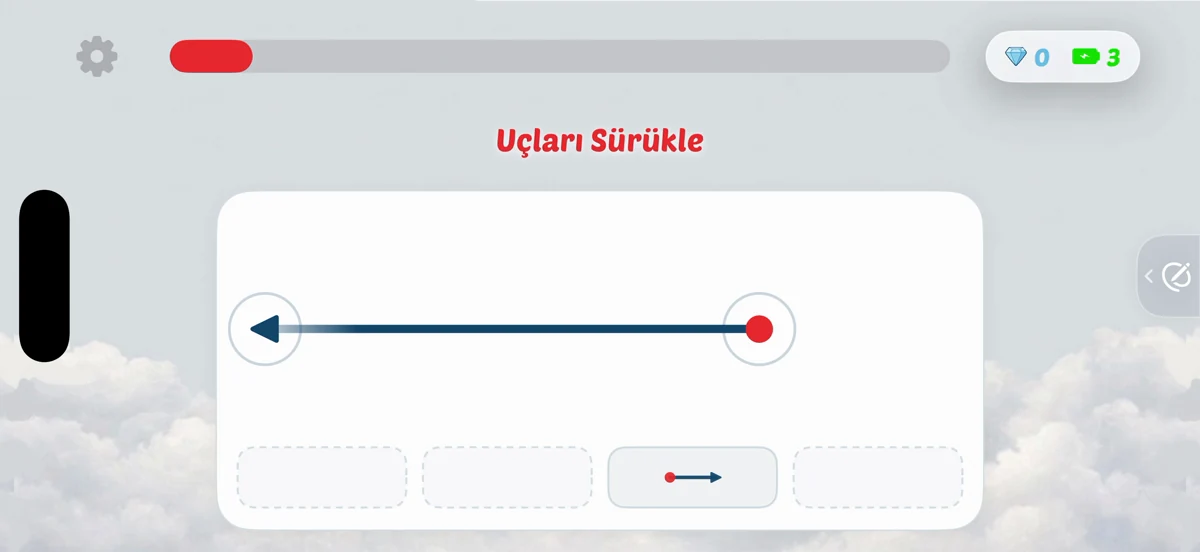
Learners discover connections.
The learner drags endpoints, watches the shape change, and examines when an arrow appears. The interaction is organised around a specific concept, with visual guidance drawing attention to the relationship being explored.
Guided discovery
Move and compare a drawing with two endpoints and a drawing that continues in one direction.
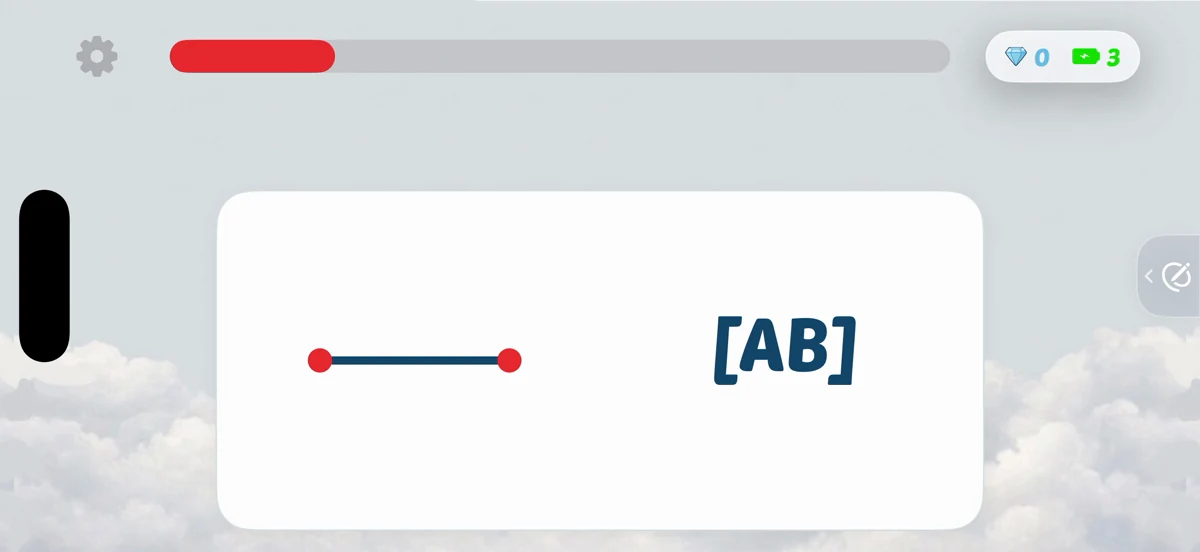
The discovery gets a name.
The shape the learner has explored appears alongside its name and mathematical notation. Concepts are introduced one at a time, connecting a visual experience to the shared language of mathematics.
Explicit explanation · linking representations
A shape bounded by two endpoints is a line segment. For endpoints A and B, this lesson displays the notation [AB].
Seeing the difference builds understanding.
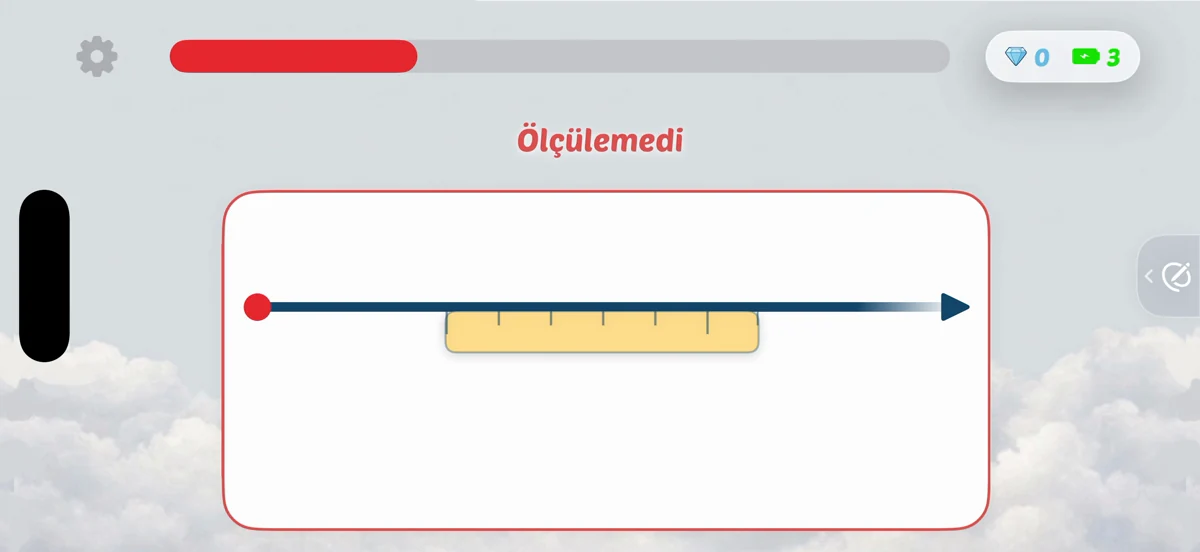
The learner measures a line segment with a ruler, then encounters a ray extending in one direction. Endpoints and arrows reveal the important difference between similar drawings. An unsuccessful attempt becomes an opportunity to clarify the concept.
Comparing examples · analysing errors
A line segment has a measurable length. A ray has no finite total length; the short drawing on screen does not make the mathematical object finite.
Knowledge is reinforced through use.
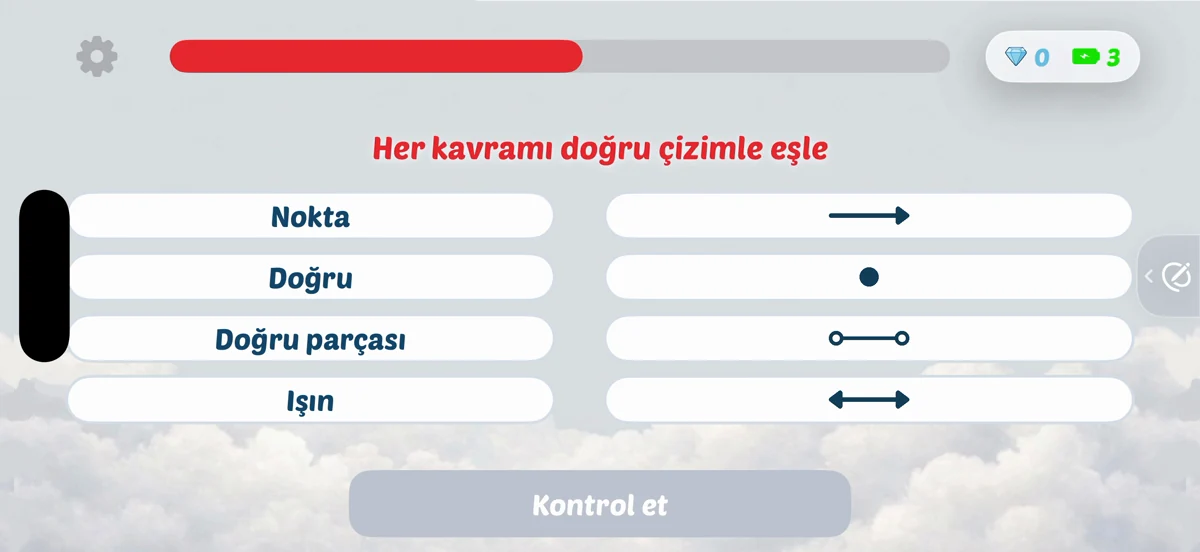
The lesson ends with short practice questions. Learners match concept names to drawings, check their answers and receive feedback. The aim is to move from recognising a visual experience to applying what they have learned.
Using knowledge again · feedback
Match points, lines, line segments and rays to the correct drawings, using endpoints and arrows to inform each choice.
Explore before class.
Go deeper in class.
The five steps describe the flow within a short lesson. Flipped learning describes where preparation fits into school: students make a first start, then work with their teacher to develop their understanding.
van Alten and colleagues’ meta-analysis of 114 studies found a small average positive effect on learning outcomes. Results varied; designs that preserved face-to-face class time and included quizzes were associated with more favourable outcomes. van Alten, Phielix, Janssen & Kester (2019)
Read more about flipped learningTake a first step into the topic
Explore shapes, meet concepts and attempt initial questions in a short lesson. Preparation gains meaning through teacher guidance.
Apply, discuss and go deeper
Solve new problems with a teacher, explain your reasoning and discuss alternative approaches. App-based preparation supports classroom work.
Take a closer look at the research.
How the research connects to the product
These sources examine learning principles; they do not test Oyster’s complete five-step sequence as a single intervention. The sequence is our application of these findings to lesson design. Outcomes can vary with the learner, topic and teaching context.
- Gruber, Gelman & Ranganath (2014). States of curiosity modulate hippocampus-dependent learning via the dopaminergic circuit. Neuron, 84(2), 486–496. DOI: 10.1016/j.neuron.2014.08.060.
An experimental study of curiosity and memory.
- Alfieri, Brooks, Aldrich & Tenenbaum (2011). Does discovery-based instruction enhance learning? Journal of Educational Psychology, 103(1), 1–18. DOI: 10.1037/a0021017.
A meta-analysis comparing unassisted and guided discovery.
- Pashler et al. / IES (2007). Organizing Instruction and Study to Improve Student Learning. Institute of Education Sciences / What Works Clearinghouse. NCER 2007-2004.
A practice guide on representations and using knowledge again.
- Star et al. / IES (2015; revised 2019). Teaching Strategies for Improving Algebra Knowledge in Middle and High School Students. Institute of Education Sciences / What Works Clearinghouse.
A practice guide on analysing examples in algebra.
- van Alten, Phielix, Janssen & Kester (2019). Effects of flipping the classroom on learning outcomes and satisfaction: A meta-analysis. Educational Research Review, 28, 100281. DOI: 10.1016/j.edurev.2019.05.003.
A meta-analysis of learning outcomes in flipped classrooms.